“À la bonne saison, la vache se nourrit d’herbe fraîche et, en hiver, d’herbe sèche, le foin. La betterave et l’orge constituent des compléments alimentaires appréciés.”
“In good season, the cow feeds on fresh grass, and in winter, on dry grass, hay. Beetroot and barley are popular nutritional supplements.”
Recently, I visited a picturesque little town in Switzerland called Gruyères, world-famous for its delicious cheese. As a language lover and curious traveler, I also visited La Maison du Gruyère, the interactive cheese factory and museum. The main language there is French, but most displays are also translated into German and English.
One of the memorable parts of the visit was the “Touch” section (Touchez / Berühren Sie). This was a space where visitors can feel materials and tools used in cheesemaking. There wasn’t any English translation, so I decided to note down the French words and look up the ones I did not know later. Here’s a small glossary I built from that display—a little window into the vocabulary of cheese. Some of these words are simple words around the topic of cheese; others are more technical.

From up-left to right-down:
1. (une) cloche – bell
Cows in the Alps often wear bells around their necks, a familiar sound of Swiss mountain pastures.
2. (une) herbe – grass or herbs
Fresh grass is the main food for cows in summer; dried grass (hay) in winter.
3. (une) chaule – regional term, likely for a salt block used by cows (?)
This one wasn’t in any dictionary! The object looked like a wooden plate, so it’s probably a local or dialect word.
4. (les) cuillères – spoons
Part of the display represents tools used for milk and cheese handling.
5. (une) cerise – cherry
Here, it’s the name of the cow in the museum’s audio guide—Cerise (“Cherry”) tells the story of cheesemaking.
6. (un) abrevoir – drinking trough
Where cows drink water—an important part of their daily routine.
7. (un) petit-déjeuner – breakfast
In France, it means “breakfast,” but in Switzerland “déjeuner” alone can mean the morning meal. The display likely reminded visitors that milk and cheese are breakfast essentials.
8. (une) sonde à fromage – cheese probe
A tool used by cheesemakers to test the texture and sound of the cheese to check if it’s ready to eat.

9. (du) foin – hay
Dried grass, the cows’ main food source during winter months.
10. (du) lait – milk
The foundation of all cheese.
11. (au) chalet – at the chalet
A traditional wooden Alpine house, typical of the Swiss countryside.
12. (le) fromager – cheesemaker
The artisan who transforms milk into cheese.
13. (la) pierre à lécher (sels minéraux) – salt lick (mineral block)
A natural salt source for cows, rich in minerals they need to stay healthy.
14. (la) boille à lait – milk can
The iconic metal container used to transport fresh milk.
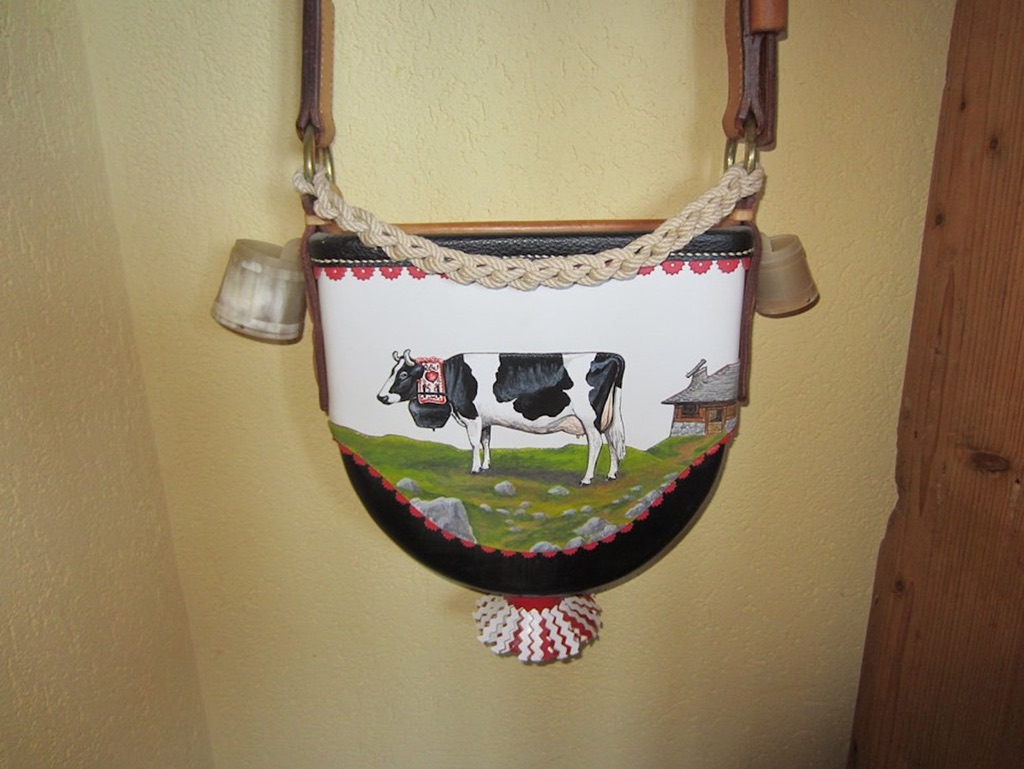
15. (le) loyi – salt pouch for cows
A beautifully embroidered salt bag decorated to the taste of the owner, often with small horn-shaped side pockets containing milking fat.

16. (le) caillé – curd
The first solid stage of cheese after milk coagulates.
Visiting Gruyère reminded me that language and culture are inseparable. Even a small museum display can teach you words (and stories!), some of which won’t appear in textbooks. I hope you enjoyed discovering some cheese vocabulary with me in this little blog post. See you in another one 🙂
 Semiha Weber
Leave a comment